
แกะหมดเปลือก! กับทุกความเคลื่อนไหวของ “AgTech Startup Ecosystem” ในประเทศไทย
เคยสงสัยกันไหมว่า สตาร์ทอัพด้านการเกษตรของไทยไปถึงไหนแล้ว ? เพราะอย่างที่เราทราบกันดีว่า ภาคการเกษตรมีความสำคัญอย่างมากในการสร้างรายได้มหาศาลกลับสู่ประเทศ มีแรงงานอยู่ในอุตสาหกรรมนี้กว่า 1 ใน 3 ของแรงงานทั้งหมด และปัจจุบันมีการใช้นวัตกรรมในการพัฒนาด้านการเกษตรมากขึ้นเรื่อยๆ
เพื่อสร้างความเข้าใจต่อแวดวงนี้ให้มากขึ้น จึงอยากชวนทุกคนค่อยๆ กะเทาะเปลือก ศึกษาข้อมูลด้าน “ระบบนิเวศวิสาหกิจเริ่มต้นด้านการเกษตร” หรือ AgTech Startup Ecosystem ไปพร้อมๆ กัน เพื่อทำความเข้าใจถึงทิศทางการเติบโตและความสำคัญของระบบนิเวศนี้มากยิ่งขึ้น เพราะการเกษตรคือรากฐานและวิถีชีวิตคนไทยมาอย่างช้านาน แม้ไม่ใช่ผู้ประกอบการหรือนักลงทุนก็สามารถทำความเข้าใจได้
รู้ไว้ได้ประโยชน์! ภาพรวม “AgTech Startup Ecosystem” ในประเทศไทย
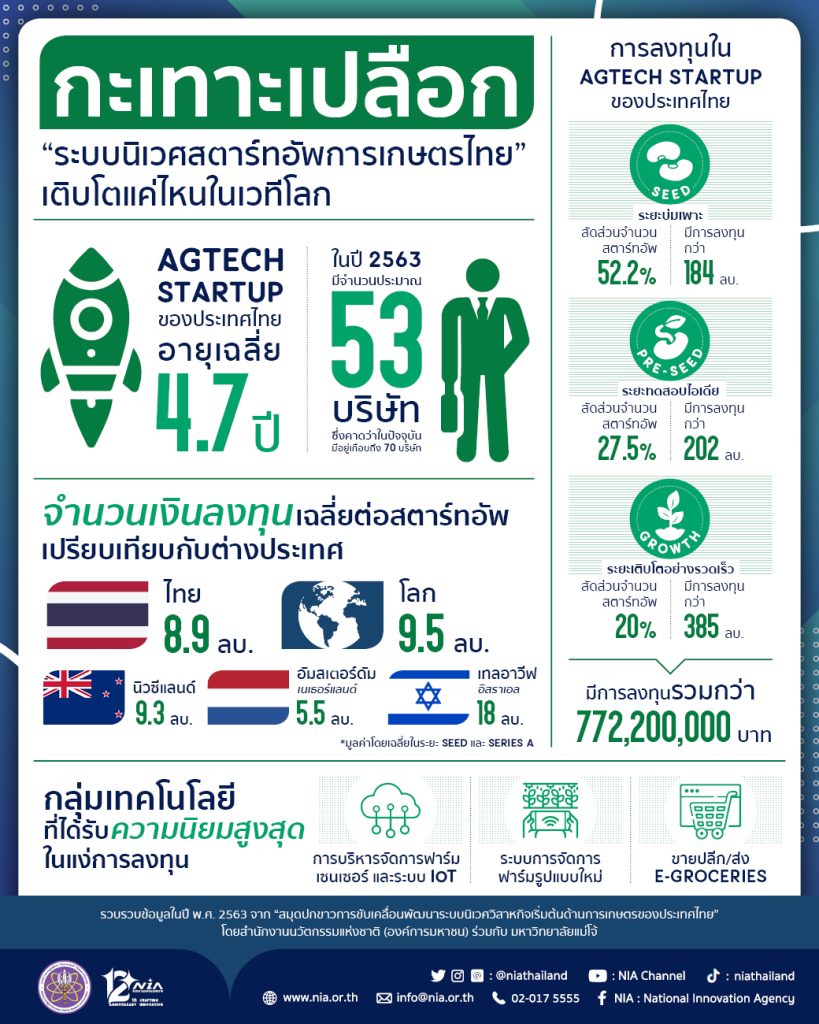
จากการสำรวจข้อมูลในปี พ.ศ. 2563 โดย NIA ร่วมกับมหาวิทยาลัยแม่โจ้ พบว่า AgTech Startup ของประเทศไทยมีอายุเฉลี่ยอยู่ที่ 4.7 ปี เท่านั้น แต่มีสตาร์ทอัพด้านการเกษตรกว่า 53 บริษัท โดยแบ่งสัดส่วนรูปแบบสตาร์ทอัพในแต่ละระดับดังนี้
– ระยะบ่มเพาะ (Seed) เป็นระยะที่สตาร์ทอัพมีผลิตภัณฑ์หรือบริการขายจริงในตลาดแล้ว 52.5%
– ระยะทดสอบไอเดีย (Pre-seed) เป็นระยะพัฒนาผลิตภัณฑ์ที่มักเกิดจากไอเดียของผู้ก่อตั้ง 27.5%
– ระยะเติบโตอย่างรวดเร็ว (Growth) เป็นระยะที่สตาร์ทอัพขยายฐานลูกค้าหรือขยายธุรกิจ 20%
สำหรับผลิตภัณฑ์หรือบริการที่สตาร์ทอัพด้านการเกษตรของไทยให้บริการมีอยู่หลายประเภทด้วยกัน ซึ่งครอบคลุมทั้งการดูแลพืชไร่ พืชสวน ปศุสัตว์ สัตว์น้ำและสาหร่าย รวมถึงแมลงต่างๆ ผ่านเทคโนโลยีที่หลากหลาย อาทิ
1. การบริหารจัดการฟาร์มเซนเซอร์และระบบ IoT (Farm Management Software, Sensing & IoT)
2. หุ่นยนต์ เครื่องจักรกลสำหรับการเกษตร (Farm Robotics, Mechanization & Equipment)
3. ระบบการจัดการฟาร์มแบบใหม่ (Novel Farming Systems)
4. เทคโนโลยีชีวภาพทางการเกษตร (Ag Biotechnology)
5. การจัดการหลังการเก็บเกี่ยว ขนส่ง และการตรวจสอบย้อนกลับ (Post-Harvest, Logistic & Traceability)
6. ตลาดการเกษตร (Agribusiness Marketplaces)
7. ธุรกิจขายปลีก/ส่งออนไลน์ (e-Groceries)
โดยกลุ่มเทคโนโลยีที่มีสัดส่วนจำนวนบริษัทมากที่สุดคือ กลุ่มเทคโนโลยีการบริหารจัดการฟาร์ม เซนเซอร์ และระบบ IoT ส่วนกลุ่มที่มีสัดส่วนน้อยที่สุดคือเทคโนโลยีการจัดการหลังการเก็บเกี่ยว ขนส่ง และตรวจสอบย้อนกลับ ซึ่งสตาร์ทอัพด้านการเกษตรส่วนใหญ่ดำเนินธุรกิจอยู่ในจังหวัดกรุงเทพมหานคร และมีการกระจายตัวอยู่บ้างในจังหวัดต่างๆ ทั่วประเทศไทย แต่ก็ยังมีปริมาณไม่มาก
เจาะลึกกว่าเดิม! เผยเม็ดเงินการลงทุนใน AgTech Startup ของประเทศไทย
ช่วง 10 ปีที่ผ่านมา ปริมาณการลงทุนทั่วโลกใน AgTech Startup เพิ่มขึ้นมาโดยตลอด ซึ่งในปี พ.ศ. 2562 มีการประเมินไว้ว่ามีมูลค่าประมาณ 27,000 ล้านดอลลาร์สหรัฐ หรือราวๆ 9 แสนล้านบาท แม้ธุรกิจในกลุ่มนี้จะได้รับผลกระทบจากวิกฤตโรคระบาด และสงครามการค้า แต่ผู้เชี่ยวชาญด้านการลงทุนก็ต่างคาดการณ์กันว่าธุรกิจในกลุ่มเกษตรจะยังคงมีความสำคัญและได้รับการลงทุนอย่างต่อเนื่อง เพราะเป็นธุรกิจที่เกี่ยวข้องกับการทำให้ผู้คนเข้าถึงอาหารได้มากขึ้น
ประเทศไทยเองก็ไม่น้อยหน้า เพราะมีการลงทุนใน AgTech Startup ปริมาณมากเช่นกัน จากการสัมภาษณ์เชิงลึกและศึกษาข้อมูลการระดมทุนของ 41 สตาร์ทอัพ พบว่า มีการลงทุนรวมสูงถึง 772 ล้านบาท ซึ่งใกล้เคียงกับกลุ่มประเทศอาเซียนอย่างมาเลเซีย เวียดนาม และเมียนมา หากพิจารณาการลงทุนตามระยะการเติบโตของสตาร์ทอัพ จะมีรายละเอียดดังนี้
– ระยะ Pre-seed มีจำนวนเงินลงทุนกว่า 184,750,000 บาท หรือร้อยละ 24 โดยมีเงินลงทุนเฉลี่ยต่อบริษัท 5,131,944 บาท
– ระยะ Seed มีจำนวนเงินลงทุนกว่า 202,131,000 บาท หรือร้อยละ 26 โดยมีเงินลงทุนเฉลี่ยต่อบริษัท 16,718,157 บาท
– ระยะ Growth มีจำนวนเงินลงทุนกว่า 385,319,000 บาท หรือร้อยละ 50 โดยมีเงินลงทุนเฉลี่ยต่อบริษัท 44,967,500 บาท
โดยกลุ่มเทคโนโลยีที่มีการลงทุนรวมสูงที่สุดอันดับหนึ่ง คือ กลุ่มเทคโนโลยีการบริหารจัดการฟาร์ม เซนเซอร์ และระบบ IoT อันดับสอง กลุ่มเทคโนโลยีระบบการจัดการฟาร์มรูปแบบใหม่ และอันดับสาม กลุ่มธุรกิจขายปลีก/ส่ง
สำหรับแหล่งที่มาของเงินทุนของ AgTech Startup ในประเทศไทยก็มีรายละเอียดที่น่าสนใจ เพราะมีเพียง 44.2% เท่านั้นที่ได้รับเงินลงทุนจาก VC CVC หรือ Angel Investor หมายความว่า AgTech Startup ของไทยกว่า 66.7% ที่เหลือใช้เงินลงทุนของตัวเอง และเน้นการเติบโตแบบค่อยเป็นค่อยไป คล้ายกับบริษัทในรูปแบบ SME ซึ่งเราเองก็คาดหวังว่าจะมีการลงทุนในสตาร์ทอัพด้านนี้เพิ่มมากขึ้น .
แต่เมื่อเทียบการลงทุนต่อหนึ่งสตาร์ทอัพกับประเทศอื่นๆ ก็จะพบว่า สตาร์ทอัพด้านการเกษตรของไทยในระยะบ่มเพาะ (Seed) และ Series A มีการลงทุนในจำนวนที่สูงมาก ใกล้เคียงกับค่าเฉลี่ยจากเงินลงทุนต่อหนึ่งสตาร์ทอัพในแบบที่ทั่วโลกได้รับ
จำนวนเงินลงทุนเฉลี่ยต่อสตาร์ทอัพเปรียบเทียบกับต่างประเทศ
– ประเทศไทย เงินลงทุนต่อหนึ่งสตาร์ทอัพอยู่ที่ 266,813 ดอลลาร์สหรัฐ หรือ 8.9 ล้านบาท (เฉพาะด้านการเกษตร)
– เมืองอัมสเตอร์ดัม ประเทศเนเธอร์แลนด์ เงินลงทุนต่อหนึ่งสตาร์ทอัพอยู่ที่ 166,000 ดอลลาร์สหรัฐ หรือ 5.5 ล้านบาท
– เมืองเทลอาวีฟ ประเทศอิสราเอล เงินลงทุนต่อหนึ่งสตาร์ทอัพอยู่ที่ 538,000 ดอลลาร์สหรัฐ หรือ 18 ล้านบาท
– ประเทศนิวซีแลนด์ เงินลงทุนต่อหนึ่งสตาร์ทอัพอยู่ที่ 279,000 ดอลลาร์สหรัฐ หรือ 9.3 ล้านบาท
– เฉลี่ยในระดับโลก เงินลงทุนต่อหนึ่งสตาร์ทอัพอยู่ที่ 284,000 ดอลลาร์สหรัฐ 9.5 ล้านบาท
(*อ้างอิงจาก Startup Genome เทียบจำนวนเงินลงทุนกับสัดส่วนพื้นที่ หากเป็นเมืองใหญ่มี Ecosystem ขนาดใหญ่จะเก็บข้อมูลเป็นเมือง แต่ประเทศเล็กอย่างนิวซีแลนด์หรือไทยจัดว่ามี AgTech Ecosystem เล็กจึงคำนวณรวมทั้งประเทศ)
เพาะเลี้ยงต้นกล้าความสำเร็จ! ด้วยการบ่มเพาะและเร่งสร้างการเติบโตให้กับ AgTech Startup โดย NIA
กว่า AgTech Startup Ecosystem ของประเทศไทยจะเดินมาถึงในจุดนี้ได้ แม้จะเป็นช่วงระยะเวลาที่ไม่นาน แต่ผ่านการทำงานร่วมกันอย่างเข้มข้นทั้งสตาร์ทอัพ เกษตรกร และหน่วยงานที่เกี่ยวข้องอื่นๆ ทั้งภาครัฐ เอกชน รวมถึงสถาบันการศึกษาต่างๆ โดย NIA เป็นส่วนสำคัญในการบ่มเพาะ ให้การสนับสนุนและเร่งสร้างการเติบโตให้กับสตาร์ทอัพด้านการเกษตรมากขึ้น ผ่านโครงการต่างๆ ดังนี้
“AgTech AI – Synergy for AgriFuture” หรือโครงการพัฒนาศักยภาพที่ปรึกษาเทคโนโลยีด้านการสร้างสตาร์ทอัพที่ประยุกต์ใช้เทคโนโลยี AI สำหรับภาคการเกษตร เป็นโครงการที่เหมาะสมกับนักพัฒนานวัตกรรมด้าน AI โดยเฉพาะ ที่จะเข้ามาช่วยแก้ไขปัญหาด้านการเกษตรในรูปแบบต่างๆ โดยมีกูรูทั้งด้าน AI และด้านการเกษตรเข้ามาช่วยให้คำแนะนำได้อย่างตรงจุด
“Inno4Farmers” หรือโครงการบ่มเพาะสนับสนุนสตาร์ทอัพด้านการเกษตร เป็นโครงการที่เน้นความร่วมมือทั้งสตาร์ทอัพ บริษัทเอกชนชั้นนำด้านการเกษตร และเกษตรกรให้มีการพัฒนานวัตกรรมร่วมกัน โดยเน้นประยุกต์ใช้เทคโนโลยีเชิงลึก (Deep Tech) เพื่อยกระดับศักยภาพของสตาร์ทอัพด้านการเกษตร ตลอดจนช่วยกันแก้ปัญหาให้กับเกษตรกร ต่อยอดธุรกิจ และทดสอบการใช้งานกับลูกค้าจริง
“AGROWTH – AgTech Accelerator” โครงการสร้างการเติบโตของสตาร์ทอัพด้านเกษตรในระดับนานาชาติ พลิกโฉมการเกษตรไทยด้วยการทำงานร่วมกับสตาร์ทอัพด้านการเกษตรจากหลากหลายประเทศ เน้นสร้างนวัตกรรมที่ตอบโจทย์กับธุรกิจและสร้างแนวทางการแก้ปัญหาแบบใหม่ๆ เช่น การเกษตรแม่นยำสูง เทคโนโลยีการผลิตพืช โดรน การทำเกษตรในร่ม ฯลฯ ซึ่งเป็นโครงการที่ร่วมมือกับ หน่วยงานภาครัฐ บริษัทเอกชนชั้นนำของประเทศไทยหลายบริษัท และนักลงทุนจากทั่วโลก
โครงการด้านการเกษตรของ NIA ยังไม่จบแค่เพียงเท่านี้ ยังมีอีกหลากหลายโครงการให้ได้ติดตามกัน ทั้งในฝั่งของการพัฒนาสตาร์ทอัพและผู้ประกอบธุรกิจนวัตกรรม เพราะการขับเคลื่อนสตาร์ทอัพด้านการเกษตรของไทยยังคงต้องขับเคลื่อนต่อไป ผ่านความร่วมมือจากหลายภาคส่วน และมีการพัฒนาแผนงานอยู่ตลอดเวลา เพื่อให้ระบบนิเวศสตาร์ทอัพด้านการเกษตรไทยเติบโตได้อย่างแข็งแรงและยั่งยืน
ข้อมูลจาก: สมุดปกขาวการขับเคลื่อนพัฒนาระบบนิเวศวิสาหกิจเริ่มต้นด้านการเกษตรของประเทศไทย (Thailand AgTech Startup Ecosystem) อ่านเพิ่มเติมได้ที่ https://www.nia.or.th/article/หนังสือ.html